
As part of the Built Architecture studio, we began our work with an international competition. Titled “Rammed Earth House”, the brief called for the design of a 30 m² dwelling made of rammed earth, to be located on a carefully selected site in southeastern Slovenia.
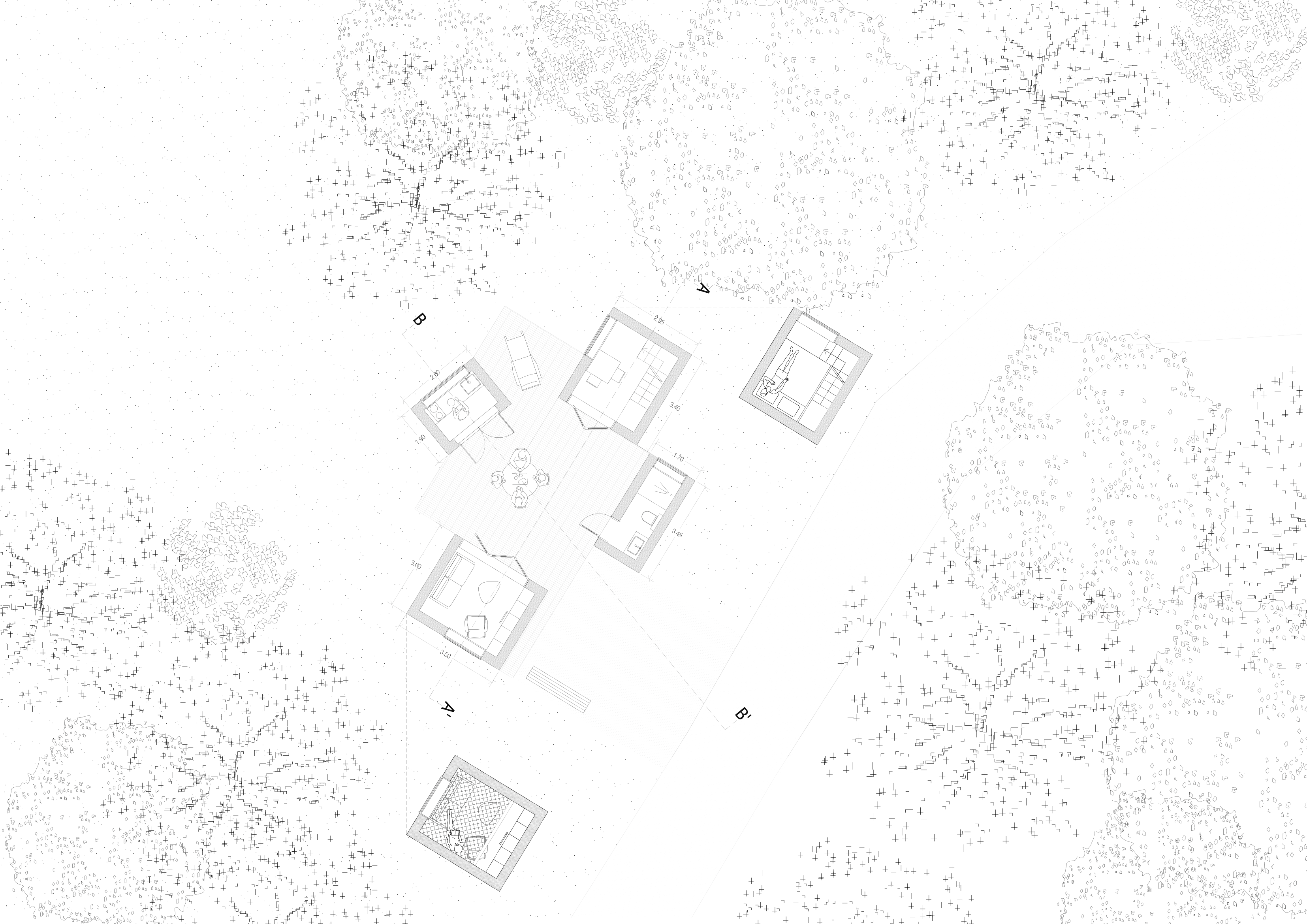
Our proposal seeks to root the architecture in its territorial and cultural context. It draws inspiration from traditional Slovenian farmsteads, historically composed of several autonomous buildings, each dedicated to a specific function—main house, grain dryer, wine cellar, storage area, garage. These farms typically organized themselves around a central courtyard, which acted as both a functional hub and a shared social space. The orientation of each structure was carefully considered in response to topography, prevailing winds and solar exposure, establishing a sensitive relationship between architecture, landscape and climate.
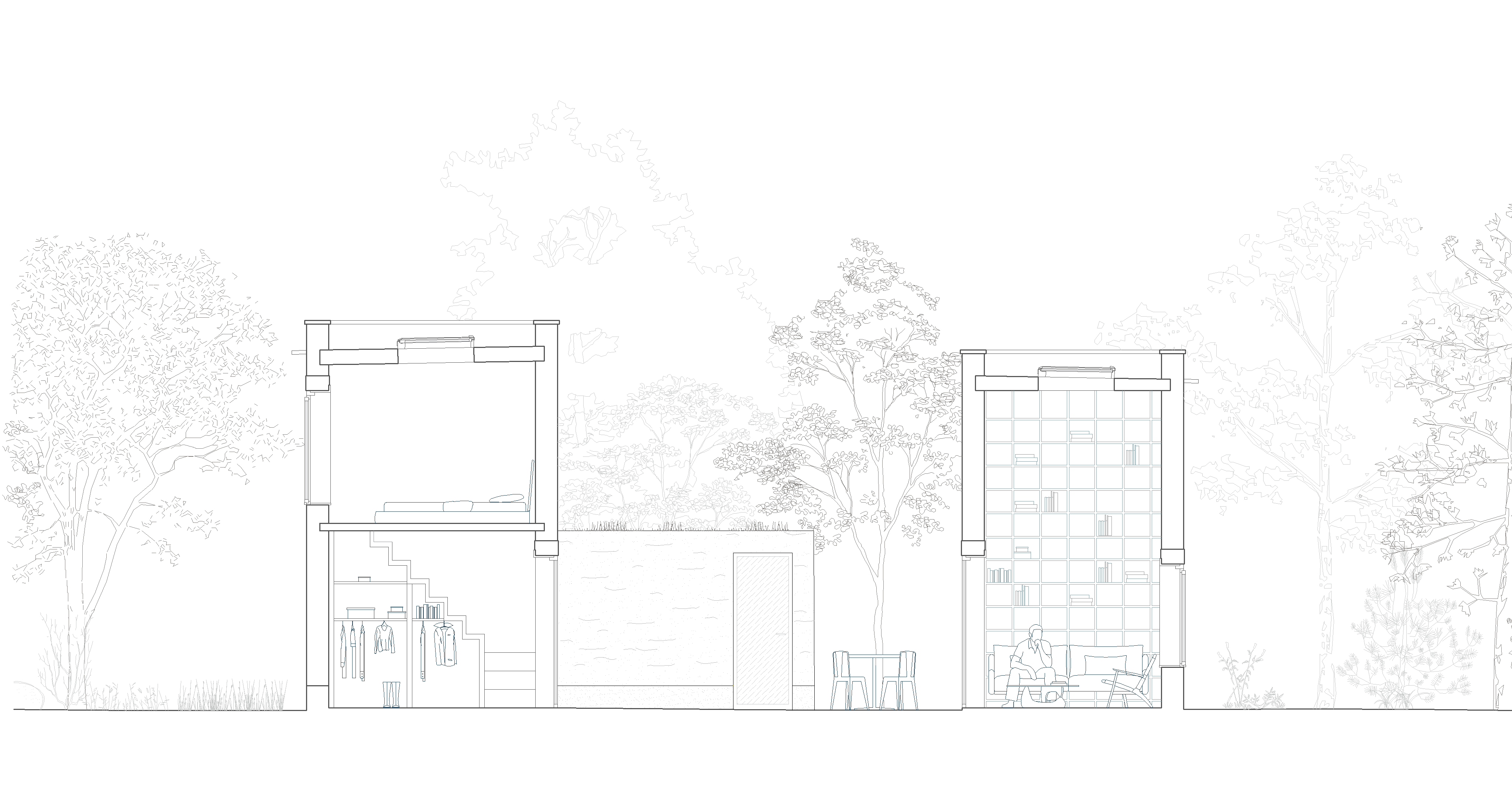
In line with this logic, our project is articulated through four distinct volumes, each fulfilling a specific function and together defining a central open space.
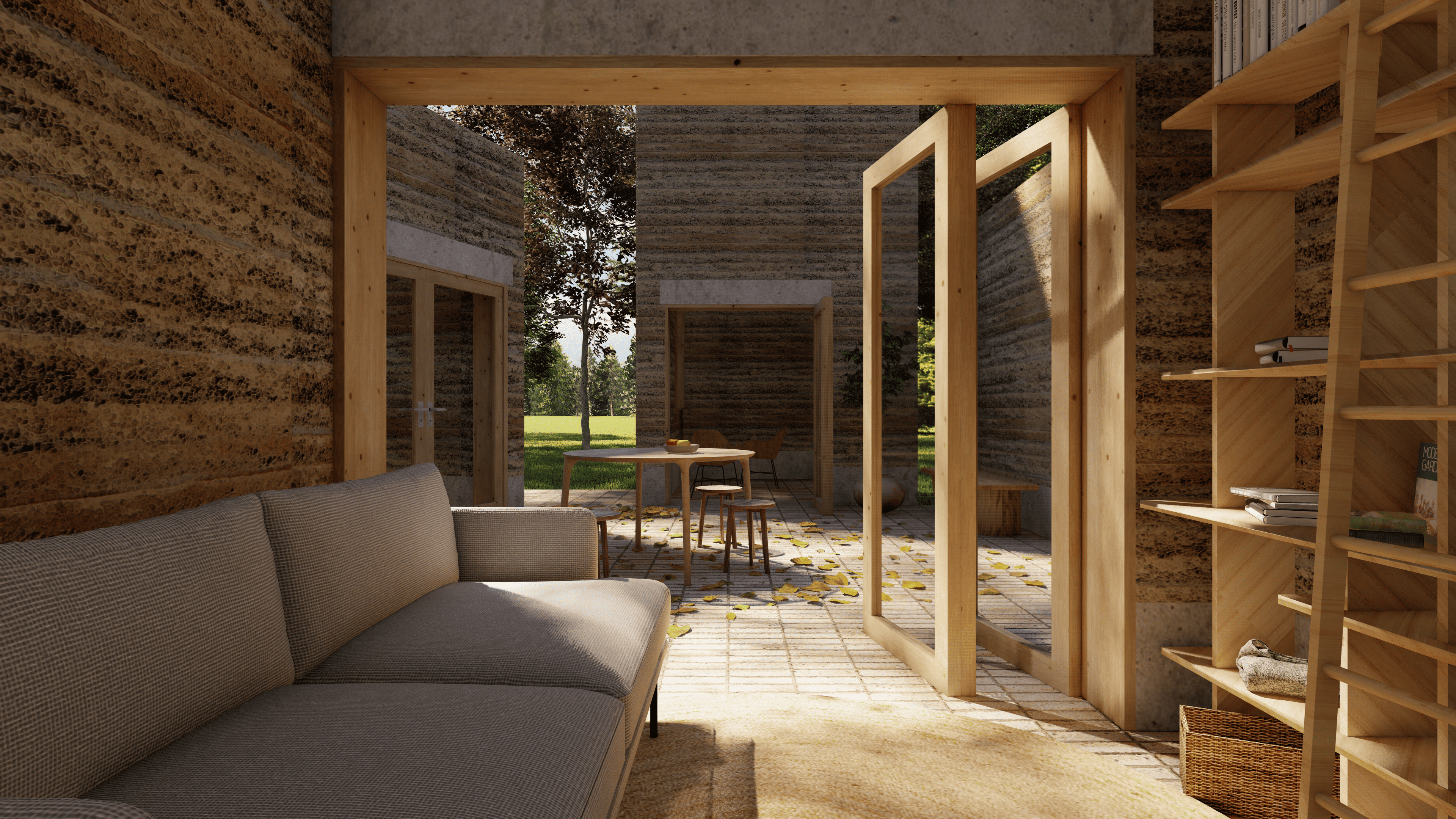
Named “Glade House”, the project takes root in the image of the glade—an open void within a dense forest, a space of light and breathing. This metaphor becomes a spatial principle: the built volumes redefine an architectural clearing, with each entity framing selected views of the surrounding landscape. Generous visual openings blur the boundary between interior and exterior, while a central courtyard ensures the cohesion of the ensemble and becomes the core of interaction between spaces and uses.
Inside, the rammed earth walls offer a tactile and atmospheric presence, both mineral and warm. The play of natural light on rough surfaces creates calm, intimate ambiences, in constant dialogue with the landscape. Each unit fosters its own spatial experience, shaped by its orientation, light, ventilation, and relationship to the ground.
The fragmented layout allows for progressive appropriation of the site: some volumes may remain open, unfinished or multifunctional. This modularity supports evolving uses over time, adapting to seasons, changing needs or rhythms of life. The project embraces an extended temporality, where dwelling is conceived as a process, evolving in phases.
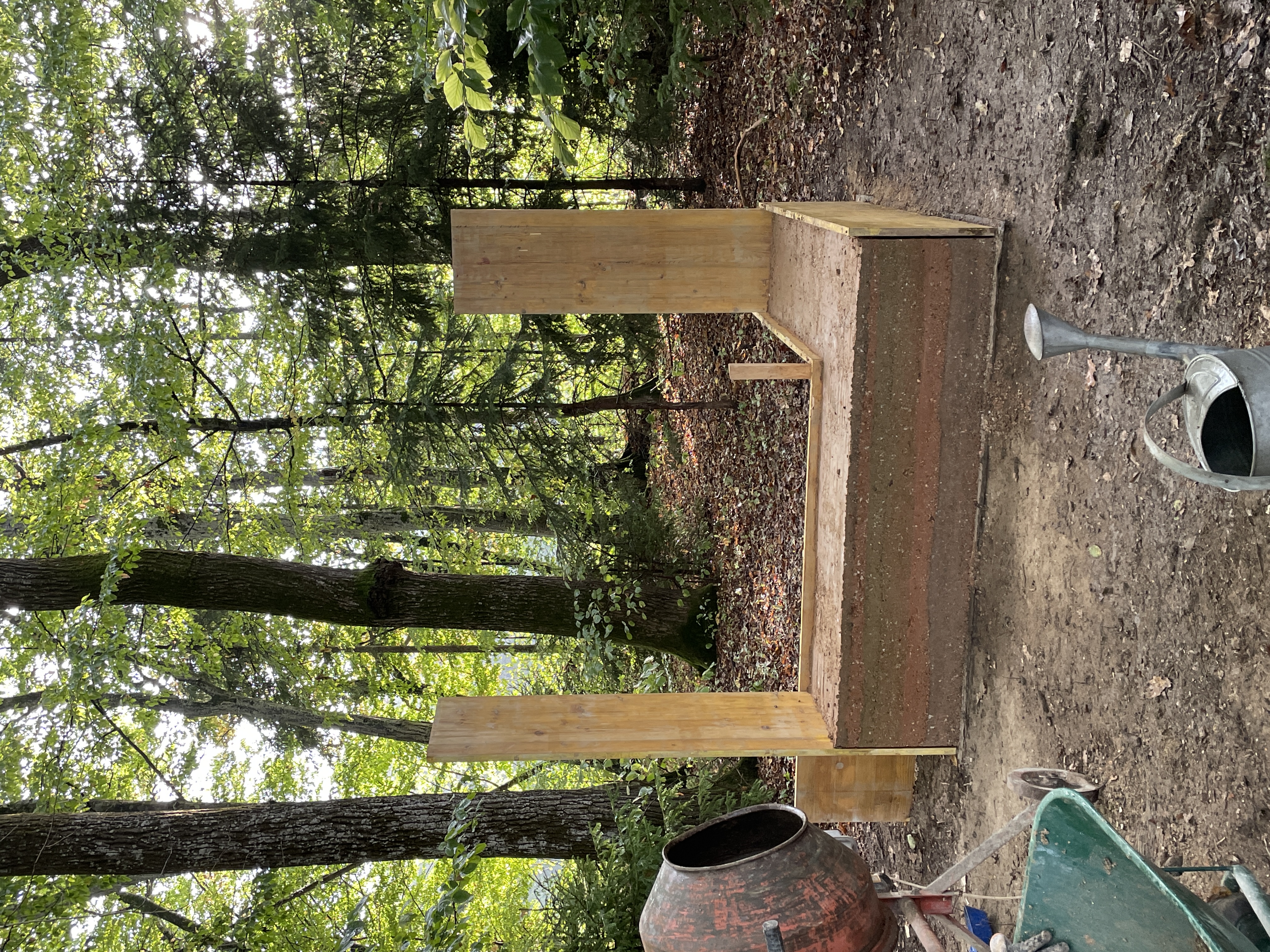
Finally, the rammed earth construction and the formal simplicity of the volumes open the door to a reasoned approach to self-building. Each unit, through its modest scale and geometry, can be built independently, drawing on local or collective know-how. The project thus becomes a medium for learning, appropriation, and connection to the territory.
Our proposal seeks to root the architecture in its territorial and cultural context. It draws inspiration from traditional Slovenian farmsteads, historically composed of several autonomous buildings, each dedicated to a specific function—main house, grain dryer, wine cellar, storage area, garage. These farms typically organized themselves around a central courtyard, which acted as both a functional hub and a shared social space. The orientation of each structure was carefully considered in response to topography, prevailing winds and solar exposure, establishing a sensitive relationship between architecture, landscape and climate.
In line with this logic, our project is articulated through four distinct volumes, each fulfilling a specific function and together defining a central open space.
Named “Glade House”, the project takes root in the image of the glade—an open void within a dense forest, a space of light and breathing. This metaphor becomes a spatial principle: the built volumes redefine an architectural clearing, with each entity framing selected views of the surrounding landscape. Generous visual openings blur the boundary between interior and exterior, while a central courtyard ensures the cohesion of the ensemble and becomes the core of interaction between spaces and uses.
Inside, the rammed earth walls offer a tactile and atmospheric presence, both mineral and warm. The play of natural light on rough surfaces creates calm, intimate ambiences, in constant dialogue with the landscape. Each unit fosters its own spatial experience, shaped by its orientation, light, ventilation, and relationship to the ground.
The fragmented layout allows for progressive appropriation of the site: some volumes may remain open, unfinished or multifunctional. This modularity supports evolving uses over time, adapting to seasons, changing needs or rhythms of life. The project embraces an extended temporality, where dwelling is conceived as a process, evolving in phases.
Finally, the rammed earth construction and the formal simplicity of the volumes open the door to a reasoned approach to self-building. Each unit, through its modest scale and geometry, can be built independently, drawing on local or collective know-how. The project thus becomes a medium for learning, appropriation, and connection to the territory.
Team • Andy Megard, Jill Ries
Studio • Built Architecture
Teachers • Vincent Pierret, Gil Honoré
Period • February /March 2021
Location • Slovenia
Teachers • Vincent Pierret, Gil Honoré
Period • February /March 2021
Location • Slovenia